

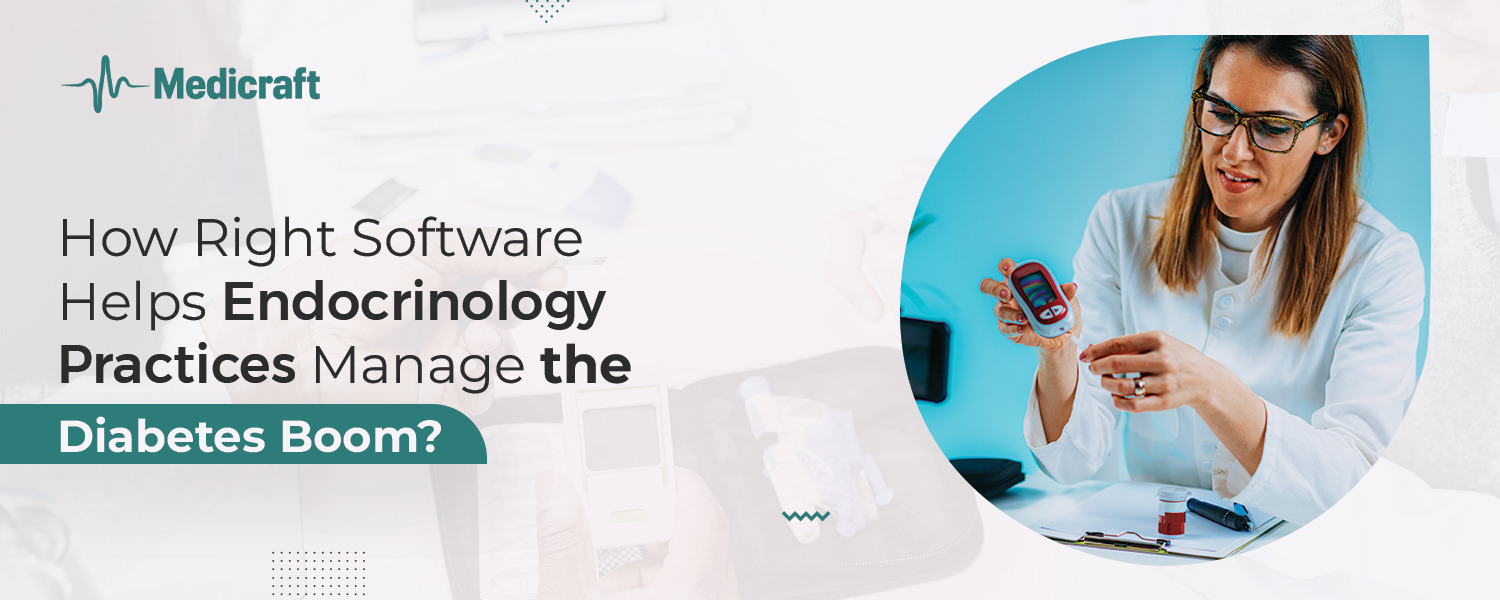
Endocrinology is one of the most demanding specialties in medicine right now, and the pressure is not letting up. Diabetes rates jumped nearly 19% between 2012 and 2022.One in ten Americans currently has diabetes, and one in three has prediabetes, a condition that is largely reversible but rarely caught and treated aggressively enough.
Meanwhile, around four in ten practicing endocrinologists are over fifty, meaning a significant portion of the specialty workforce is approaching retirement at the same time the patient population is growing.
Endocrinology Software is not just a convenience for practices dealing with this reality; it is the difference between a practice that keeps up and one that falls behind.
In this blog, Medicraft explains what the right software does for endocrinology practices, and why it matters for both clinical outcomes and operational performance.
Why is the Diabetes Caseload Growing So Fast?
Diabetes has become what experts call an "intractable" health crisis, firmly rooted and quickly rising. While the challenge is significant, a new generation of clinical tools and data-driven technologies is helping endocrinologists manage this growing patient population more effectively.
GLP-1 medications have shifted what is possible for many patients. Research is validating the hype: 99% of adults with prediabetes who were overweight or obese were diabetes-free after three years on tirzepatide.
Already, 1 in 10 Americans have tried GLP-1s for weight loss. But these medications are not accessible to everyone, and they do not work the same way for all patients. Coverage gaps, supply issues, and treatment disruptions mean GLP-1s are one part of the picture, not the whole solution.
Continuous glucose monitoring, once-weekly insulin, and other advanced treatments are changing day-to-day diabetes management for patients who have access to them. The clinical toolbox is genuinely better than it was a decade ago. The problem is that more patients need access to it, and there are not enough endocrinologists to go around.
Why are Endocrinology Practices Struggling to Keep Up?
Most endocrinologists are over 50, which indicates that they are retiring soon, and incoming graduates may be able to fill the gap left. Endocrinologists are often found everywhere in urban areas, and rarely in rural areas, where residents are more likely to have diabetes. Primary care clinicians are also scarce in this area, increasing the revenue of already-busy specialists.
The numbers from a recent survey tell the story clearly. 26% of participants said managing patient load is difficult or very difficult, and 50% said national endocrinologist shortages have a moderate or considerable negative impact on patients.
On top of the clinical pressure, reimbursement is getting more complicated. CMS has introduced payment changes that incentivize better chronic disease outcomes, which sounds positive, and it is.
But it also means endocrinology practices need to track clinical outcomes against specific payer requirements, document more carefully, and manage prior authorizations for treatments like continuous glucose monitoring. None of that is getting simpler.
What Does Good Endocrinology Software Do?
The right software shapes how every appointment is prepared, documented, billed, and followed up on.
Endocrinology practices need an integrated software that is designed to host everything they need, from patient registration to final reimbursement.
A few things matter most in an endocrinology context:
Predictive Alerting Keeps Care on Track
A predictive alerting tool is a medical device that uses artificial intelligence to predict blood sugar fluctuations before they occur.
In a busy practice seeing dozens of diabetes patients a week, it is easy for routine monitoring to slip. An alert that surfaces in the chart before the appointment prompts the right conversation without the provider having to manually review every patient's history.
Automated Documentation Reduces the Burden on Providers
Automated documentation helps physicians and nurses to be more present in the patient's encounter and avoid disruptions.
Endocrinology appointments often involve complex conversations about medication adherence, lifestyle factors, and long-term disease management.
A provider who is not focused on entering data while talking to a patient has a better conversation and produces better documentation.
Why Does Billing Integration Matter So Much in Endocrinology?
Endocrinology billing is not straightforward. Prior authorizations for devices like continuous glucose monitors, complex procedure coding, and the increasing requirements around value-based care all make the billing side of an endocrinology practice difficult to manage well.
This is where Medical Billing Software properly integrated with clinical documentation makes a real difference. Medicraft connects what happens in the appointment directly to what goes out in the claim. Codes come from the documentation rather than being entered separately.
Prior authorisation requirements are flagged before the appointment rather than discovered after the service has already been provided. Claims go out clean, and accounts receivable do not sit waiting on rework.
The integration between clinical and billing systems keeps the revenue cycle functioning without constant manual intervention.
How Does Patient Engagement Affect Diabetes Outcomes?
Better Communication
Diabetes management requires ongoing patient participation, making communication critical to outcomes. Research shows that diabetes patients who perceive their doctors as good communicators feel more confident in their self-care.
The Right Software
An endocrinology practice dealing with a heavy diabetes caseload cannot rely solely on in-person appointments to keep patients engaged with their care. Between visits, patients are making daily decisions about diet, medication, and monitoring. If they feel disconnected from their care team, those decisions suffer.
Patient engagement tools ensure secure messaging, which allows patients to send a quick question about their glucose readings. A portal where lab results are accessible as soon as they are ready.
Appointment reminders that reduce no-shows. These are not complicated features, but they make a real difference to how connected a patient feels to their care and how likely they are to follow through on their care plan between visits.
Patient engagement tools enable direct messaging and other outreach to help patients interact with clinical providers, schedulers, and billing staff so that they feel more connected to their everyday care.
What About Social Determinants of Health?
One critical function of a comprehensive diabetes care management model is in the social determinants of health. Supporting high-risk patients with community resources such as food or housing assistance has been shown to narrow care gaps.
A patient who cannot afford the food their care plan recommends, or lacks reliable transport to follow-up appointments will not maintain the health outcomes their treatment plan is designed to produce. Practices that identify and address these factors through referrals to community programmes, care coordination, see better outcomes than those that treat every patient purely on clinical factors alone.
Software that supports SDOH screening and documentation, and connects those findings to the broader care record, makes this kind of proactive care management realistic at scale.
How Should an Endocrinology Practice Think About Population Health?
Accurate Data
Managing diabetes well across a large patient population requires more than good individual appointments. It requires data to show how the whole population is doing and where attention is needed most.
Population Health Management Tools
Population health management tools built into a properly integrated EHR give practices a view across their entire diabetes patient population who are overdue for A1C testing. Patients who have had a significant change in their readings, and who have not been seen in longer than their care plan recommends.
This kind of visibility allows a small team to actively manage a large and complex patient population without important things falling through the cracks.
Remote Monitoring
Remote monitoring adds another dimension. As continuous glucose monitors and other devices generate real-time patient data, a practice with the right infrastructure can review and respond to that data between appointments rather than waiting until the next visit to find out what happened over the past three months.
Why Does Endocrinology Practice Choose Medicraft?
Endocrinology practices do not need generic software adapted to their specialty. They need a platform built with the clinical complexity, billing demands, and patient population characteristics of endocrinology in mind.
Medicraft brings clinical documentation, billing, patient engagement, and population health tools together in one system. Templates are built for how endocrinology appointments actually run. Billing is connected to clinical documentation, so prior authorisation requirements are caught early and claims reflect what happened in the visit.
Patient engagement tools keep chronic disease patients connected to their care between appointments.
For practices dealing with rising diabetes caseloads and the operational pressure that comes with them, the right software is the infrastructure that makes good care deliverable at scale.
Frequently Asked Questions
General EHRs are built for broad use across many specialties. Endocrinology has specific documentation needs (chronic disease tracking, device integration, complex prior authorization requirements) that a generic system handles poorly. Specialist software design for how endocrinology works saves significant time and reduces errors that show up in both clinical care and billing.
Prior authorization requirements for devices like continuous glucose monitors vary by payer and change regularly. Software that flags these requirements before a service is provided rather than after means the practice is not dealing with denied claims for services that have already been delivered. That proactive approach protects both the patient's access to treatment and the practice's revenue.
Yes, and the improvement tends to be significant. When billing codes come directly from clinical documentation, the errors that cause denials largely disappear. Eligibility checks before appointments and claim scrubbing before submission catch the issues that do remain. Most practices see a clear improvement in first pass claim rates within the first few months.
Secure messaging that lets patients ask questions between visits, portal access to lab results, and consistent appointment reminders all keep patients more engaged with their care. Research consistently shows that patients who feel well-supported by their care team make better daily decisions about their health.
Look for specialty-specific templates that match how your appointments run, billing that is integrated with clinical documentation rather than running alongside it independently, population health tools that give visibility across the patient panel, and patient engagement features built into the same system. Ask specifically how prior authorisation requirements are handled and how billing codes are generated from clinical encounters. Those two questions will tell you a great deal about whether the platform is actually built for endocrinology or just marketed toward it.
Still have questions?
Contact Us