


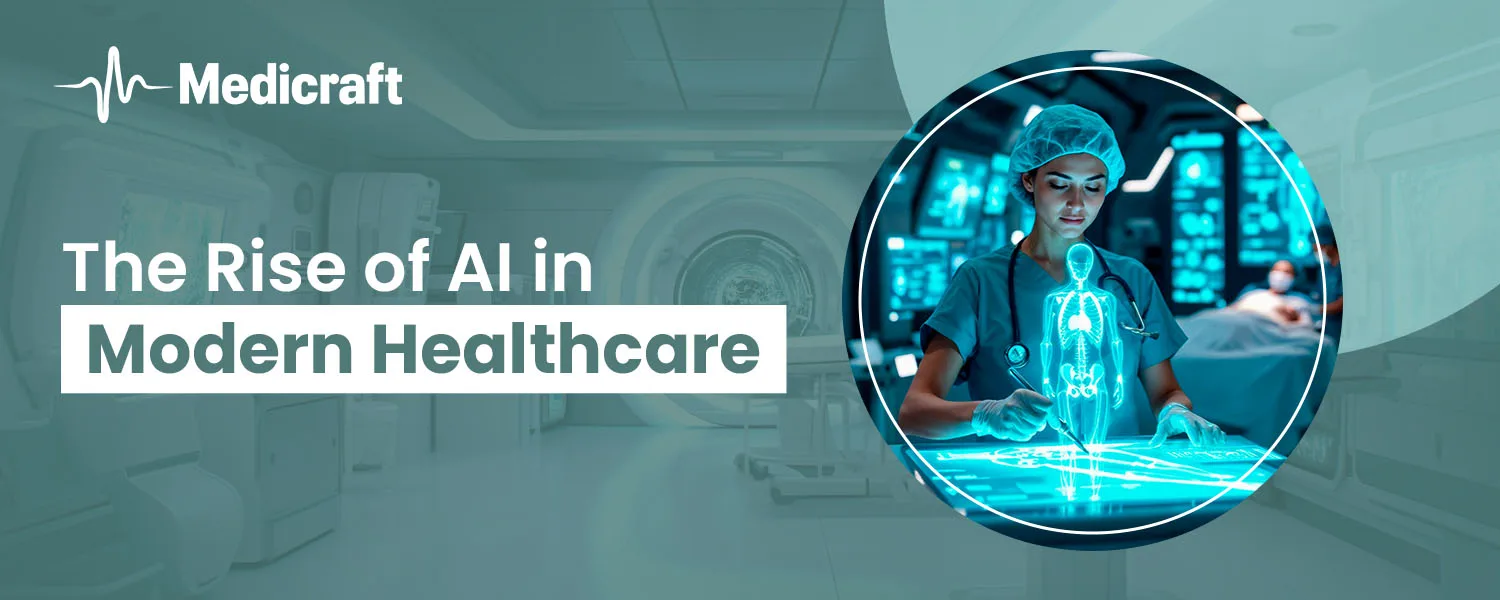
With the help of advanced technology, we are all close to a future where diseases can easily be detected way before the symptoms even appear. Administrative tasks will stop being a burden as everything will be done through automation, and new medicine will develop faster than ever.
Diagnosis is where the treatment truly begins. Advanced technology like medical billing software is what we have right now, and it is good, but it can get better with time and help healthcare professionals diagnose diseases even faster. Things that are invisible to the human eye will be clearly caught by artificial intelligence, which will save many lives in the near future.
Impact of AI on Healthcare
Reduced Administrative Burden
Administrative work is the main cause of burnout amongst clinical staff at healthcare practices. There are various tasks that they must take care of simultaneously, which takes away their focus from patient care.
AI-powered tools can help them with tasks like documenting patient visits and generating invoices so that they can focus their attention on patient care solely.
It also enhances the patient experience by streamlining the process and increasing the efficiency. Instead of being overwhelmed by paperwork, they can do what they were meant to do: help people.
Drug Discovery and Research
Developing a new drug or doing research for it are both incredibly heavy tasks. On average, it takes billions of dollars and decades to develop a new drug and declare it fit for public use.
Artificial intelligence can help with drug discovery and research in multiple ways. When it comes to drug discovery, a healthcare professional has to analyse a large number of datasets that can be time-consuming and prone to errors as well. This is simplified with the help of AI.
AI is responsible for making sure that the chances of a medical breakthrough keep increasing. Terminal diseases like cancer are on the verge of being cured with the help of artificial intelligence and its speed to come up with new drug trials.
Simplified Diagnosis
Diagnosis has not always been an easy task to accomplish. AI can manage patient risk like we have never witnessed before. Prioritising patients with higher risk and giving them the treatment they need as soon as possible can make all the difference in the world.
This proactive approach helps healthcare professionals intervene earlier and help patients with their recovery journey.
Diseases that are deadly, like cancer, can cause harm to our bodies that no medicine can reverse, so with a proactive approach, a lot of cancer patients can be saved before it gets too late to do so.
Final Thoughts
The healthcare industry is prepared to step into the future. Artificial intelligence can help healthcare professionals reach the heights of medicine that they have not even dreamed of yet.
You can deliver a better experience to your patients and help them have a comfortable experience during such a stressful time in their lives.
With advanced technology and great medical billing software programmes like Medicraft, you can ensure that all your administrative burden vanishes into thin air and your medical billing issues clear up faster than ever.
Invest in a good medical billing software like Medicraft and help your revenue cycle grow.
Frequently Asked Questions
In this age of AI, leveraging artificial intelligence can easily automate monotonous administrative activities. The overall workload associated with documentation is also significantly reduced. Along with documentation, these tools can be used for invoicing and processing information. Healthcare professionals can dedicate more time and attention to patient-facing tasks.
AI can analyze large volumes of healthcare information. With that information, it can identify patterns that may require instant clinical attention. The analytical capabilities of AI can support earlier identification of higher-risk patients. In this way, healthcare professionals can prioritize cases requiring timely intervention. However, it can only complement clinical expertise and not replace professional judgment.
Yes. AI is used in today's world to significantly reduce repetitive and time-consuming tasks that can otherwise take time away from patient care. The above article discusses documentation and invoice generation as potential applications. Staff can concentrate more on patient care when these tasks are automated and handled by AI. Therefore, AI contributes to greater operational efficiency within healthcare organizations.
In medical research, extensive analysis of scientific and clinical datasets is often required. AI can process large datasets more efficiently and identify patterns that researchers may investigate further. It can also support the prediction of molecular structures and drug-target interactions. This can reduce the time needed to move from concept to laboratory testing. However, no technology can eliminate scientific validation or regulatory requirements surrounding new treatments.
Artificial intelligence will continue to transform healthcare in the coming years. It can improve diagnostic support, personalize treatment plans, automate administrative tasks, and allow healthcare professionals to spend more time with patients. AI may influence diagnosis, administrative automation, research, risk assessment, and other healthcare processes. The technology can augment professional capabilities while reducing repetitive operational workloads in healthcare.
Still have questions?
Contact Us